
Supporting oncology professionals through education
The content on this site is intended for healthcare professionals only
The content on this site is intended for healthcare professionals only
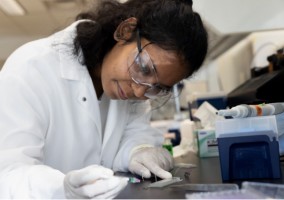
The effectiveness of chemotherapy for brain cancer, done with a technique that opens the blood-brain barrier, can be monitored by blood draw, researchers at Northwestern Medicine and the University of Michigan have shown.
The new test could help patients with a form of brain cancer called glioblastoma by informing doctors whether to continue with a particular chemotherapy drug, switch drugs or stop treatment.
The study was primarily funded by the National Institutes of Health.
"Instead of waiting months, after one dose we can know if a given treatment is working," said Northwestern Medicine neurosurgeon Adam Sonaband, co-corresponding author of the study published in Nature Communications.
"That is huge for glioblastoma patients. It could potentially prevent patients from getting prolonged treatments that are ineffective, thus also avoiding unnecessary side effects."
Glioblastoma is a commonly fatal disease, with most patients dying within two years and only 10% of patients alive at five years.
The tumour is arising from and infiltrating into the brain, so it cannot be completely removed.
Some residual cancer cells remain after surgery and give rise to new tumours.
And unlike other cancers, most chemotherapy agents and anti-cancer drugs cannot cross the blood-brain barrier that protects the brain from toxins.
Researchers of the Northwestern Medicine Malnati Brain Tumour Institute ran an earlier clinical trial with the SonoCloud-9 from Carthera in Lyon, France—a therapeutic ultrasound device that opened the blood-brain barrier for about an hour so that the chemotherapy drug paclitaxel could get in.
This new analysis testing a diagnostic technology from the University of Michigan demonstrates that opening the blood-brain barrier also lets tumour content leak into the blood.
That makes it possible to assess how well a treatment is working through blood draws taken before and after each treatment.
"There are tiny particles floating in patient blood, called extracellular vesicles, that have been released by the cancer cells. These particles act as messengers, carrying special bits of genetic tumour material and proteins. The big challenge is figuring out how to find and pull out only those that come from cancer cells and not from elsewhere in the body," said Sunitha Nagrath, the Dwight F.Benton Professor of Chemical Engineering at U-M and co-corresponding author of the study.
The Michigan team found a way to capture extracellular vesicles and particles (EVPs) from cancer cells with a specific lipid, or fat molecule, commonly found on the exosome's surface.
Isolating them from blood plasma samples run through their GlioExoChip turns blood draws into "liquid biopsies."
"Cells use extracellular vesicles and particles for communication, and EVPs can be hijacked for disease progression. It is exciting to be a part of this technology that can successfully leverage EVPs for monitoring treatment response in tumours," said Abha Kumari, a Ph.D. student in chemical engineering at U-M and co-first author of the study.
EVPs from cells that die during treatments are easier to catch because the lipid used to capture the EVPs becomes more abundant.
Therefore, the team counted the extracellular vesicles that came from tumours before and after each treatment, calculating a ratio by dividing the post-chemotherapy count by the pre-chemotherapy count.
If that ratio was going up with each chemotherapy session, the treatment was successful.
If it stayed flat or declined, the treatment was ultimately deemed unsuccessful.
"Opening the blood-brain barrier allows tumour-derived vesicles to be measured in blood, providing a clinically meaningful liquid biopsy signal," said Mark Youngblood, a neurosurgery resident at Northwestern Medicine and co-first author of the study.
"The GlioExoChip provides a quick and minimally invasive way to monitor treatment response in a disease where MRI scans often give misleading results."
Next, the researchers will validate their findings with other glioblastoma therapies, as well as continuing to explore the usefulness of detecting extracellular vesicles to assess the treatments of other cancers.
Additional support for this study was provided by the Lou and Jean Malnati Brain Tumour Institute of the Robert H.
Lurie Comprehensive Cancer Centre, Moceri Family Foundation, U-M Forbes Institute for Cancer Discovery, U.S. Department of Defence, American Brain Tumour Association, Tap Cancer Out and Focused Ultrasound Foundation.
In-kind support was provided by Carthera, the manufacturer of the SonoCloud-9 device, an investigational product that is not yet approved outside clinical trials.
Researchers from Carthera also contributed to this study. The device was built at the Lurie Nanofabrication Facility. The study was conducted with the help of the Michigan Centre for Materials Characterisation, Biointerfaces Institute Nanotechnicum and Proteomics Resource Facility.
The team has applied for patent protection with the assistance of U-M Innovation Partnerships and is seeking partners to bring the technology to market.
Article: Dynamic release of extracellular particles after opening of the blood-brain barrier predicts glioblastoma susceptibility to paclitaxel
Source: University of Michigan
Image: Jeremy Little / Michigan Engineering