
Supporting oncology professionals through education
The content on this site is intended for healthcare professionals only
The content on this site is intended for healthcare professionals only
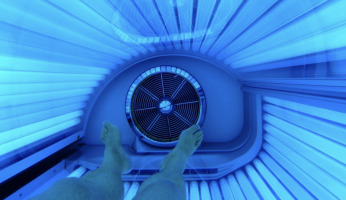
Tanning bed use is tied to almost a threefold increase in melanoma risk, and for the first time, scientists have shown how these devices cause melanoma-linked DNA damage across nearly the entire skin surface, reports a new study led by Northwestern Medicine and University of California, San Francisco.
Melanoma, the deadliest skin cancer, kills about 11,000 in the U.S. each year.
Despite decades of warnings, the precise biological mechanism behind tanning beds’ cancer risk remained unclear.
The indoor tanning industry, which is making a comeback, has used that uncertainty to argue that tanning beds are no more harmful than sunlight.
This new study “irrefutably” challenges those claims by showing how tanning beds, at a molecular level, mutate skin cells far beyond the reach of ordinary sunlight, according to the authors.
“Even in normal skin from indoor tanning patients, areas where there are no moles, we found DNA changes that are precursor mutations that predispose to melanoma,” said study first author Dr. Pedram Gerami, professor of skin cancer research at Northwestern University Feinberg School of Medicine.
“That has never been shown before.”
The findings are published in Science Advances.
A clinical mystery
Gerami, who also directs the melanoma programme in dermatology at Northwestern, has been treating melanoma patients for 20 years.
Over the years, he noticed an unusually high number of women under 50 with a history of multiple melanomas, and suspected the linking factor was tanning bed usage.
So, along with his research team, he designed the epidemiologic part of the study and compared the medical records of roughly 3,000 tanning bed users with 3,000 age-matched controls with no history of indoor tanning.
The team found that melanoma was diagnosed in 5.1% of tanning bed users compared with 2.1% of non-users.
After adjusting for age, sex, sunburn history and family history, tanning bed use remained associated with a 2.85-fold increase in melanoma risk.
Tanning bed users were also more likely to develop melanoma on sun-shielded body sites, such as the lower back and buttocks.
These findings supported the idea that tanning beds may cause broader DNA injury than sun exposure.
DNA sequencing
To test that hypothesis, the scientists used new genomic technologies to perform single-cell DNA sequencing on melanocytes (the pigment-producing skin cells where melanoma begins) from three skin donor groups.
The first group included 11 patients from Gerami with long histories of indoor tanning.
The second group consisted of nine patients who had never used tanning beds but were otherwise matched for age, sex and cancer risk profiles.
A third group of six cadaver donors supplied additional skin tissue to round out the control samples.
The scientists sequenced 182 individual melanocytes and found skin cells from tanning bed users carried nearly twice as many mutations as those from controls and were more likely to contain melanoma-linked mutations.
In indoor tanners, the mutations also appeared in body areas that typically remain protected from the sun, confirming that tanning beds create a broader field of DNA injury.
“In outdoor sun exposure, maybe 20% of your skin gets the most damage,” Gerami said.
“In tanning bed users, we saw those same dangerous mutations across almost the entire skin surface.”
Cancer survivor donates skin biopsy
The study would not have been possible without the generosity of Gerami’s patients who donated their biopsies.
One of them, 49-year-old Heidi Tarr from the Chicago area, used tanning beds heavily during high school — two to three sessions a week — because friends and celebrities at the time were also doing it and “it felt like that's what made you beautiful.”
Decades later, as a mother in her thirties, she noticed a mole on her back and immediately feared the worst.
Her melanoma diagnosis led to surgery, years of frequent follow-up visits and more than 15 additional biopsies as new moles appeared.
“The biopsies can be painful, but the mental anxiety is worse,” she said.
“You’re always waiting for the call that it’s melanoma again.”
When Gerami explained the study, she volunteered more biopsies without hesitation.
“I value science, and I wanted to help,” she said.
“If what happened to my skin can help others understand the real risks of tanning beds, then it matters.”
‘Wronged by the industry’
After seeing the biological and clinical evidence side by side, Gerami said the need for policy change is clear.
“At the very least, indoor tanning should be illegal for minors,” he said.
“Most of my patients started tanning when they were young, vulnerable and didn’t have the same level of knowledge and education they have as adults,” he said.
“They feel wronged by the industry and regret the mistakes of their youth.”
Gerami also said tanning beds should carry warnings similar to those on cigarettes.
“When you buy a pack of cigarettes, it says this may result in lung cancer,” he said.
“We should have a similar campaign with tanning bed usage. The World Health Organisation has deemed tanning beds to be the same level of carcinogen as smoking and asbestos. It’s a class one carcinogen.”
Gerami suggests that anyone who frequently tanned earlier in life should have a total-body skin exam by a dermatologist and be evaluated for whether they need routine skin checks.
Source: Northwestern University