Background: In resource-limited settings like Ghana, the growing burden of oncology care demands robust pharmaceutical quality improvement (QI) strategies to ensure safe and effective systemic cancer treatment. However, limited evidence exists on the implementation and impact of such strategies within pharmacy departments of tertiary healthcare facilities.
Aim: The study assessed the effectiveness, impact and challenges associated with QI strategies and practices in the pharmacy departments of four major tertiary healthcare facilities in Ghana.
Methods: A multi-centre cross-sectional study was conducted to assess QI practices in oncology care. A structured questionnaire and an observational checklist were used to collect data from 91 pharmacy staff who were recruited via stratified random sampling. Quantitative analysis was performed using STATA version 19 with descriptive and inferential statistics applied to evaluate the implementation and perceived effectiveness of QI strategies.
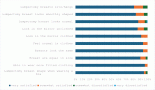
Results: The mean age was 37.5 ± 9.9 years. Various QI strategies were widely implemented, including the use of technology (100%), standard operating procedures (92.3%) and staff training (83.5%). Key focus areas were inventory management, patient safety and reduction of medication error. While overall perceptions of QI effectiveness were high (mean = 4.92), training adequacy and resource allocation scored lower. Major challenges included theft, preferential treatment of patients and inventory issues. Regression analysis identified staff training (p = 0.026), patient-centered focus (p = 0.013) and responsiveness (p = 0.011) as significant predictors of perceived performance, underscoring the importance of these factors in enhancing pharmacy service quality.
Conclusion: The study highlights the widespread adoption of QI strategies in Ghanaian tertiary hospital pharmacy departments and their perceived positive impact on oncology care delivery. Despite notable strengths in technology use and service orientation, gaps in staff training and resource allocation remain. Addressing these challenges through targeted investments and continuous professional development is essential to strengthen pharmaceutical services and ensure safer, more efficient cancer care in resource-limited settings.