Introduction: The duration of treatment for desmoid-type fibromatosis (DTF) is undefined. This study aimed to evaluate the efficacy of discontinuing sorafenib in responding patients with extremity DTF. We hereby report the initial findings comprising outcomes of 20 evaluable patients enrolled in this study.
Methods: This prospective single-arm phase 2 Simon’s 2-stage trial enrolled adults with radiologically non-progressive, pain-free (Edmonton Symptom Assessment Scale (ESAS) score <2) extremity DTF post at least 1 year of sorafenib. Sorafenib was discontinued and patients were monitored by clinical examination, magnetic resonance imaging, European Organisation for Research and Treatment of Cancer Quality of Life Questionnaire-Core 30 and Addenbrooke’s Cognitive Examination. Disease progression was defined as ≥10% increase in size plus ESAS >5 or ≥20% increase in size. The primary endpoint was a 1-year progression-free survival rate (PFR) after discontinuation. An unplanned analysis of the primary objective among 20 evaluable patients is being presented in this study.
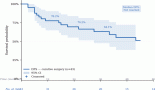
Results: 33 patients had a median age of 29.5 years (range: 23–38) and a female-to-male ratio of 1.2:1. Median duration of sorafenib therapy was 24 months (range: 14.5–33.5), and at a median follow-up of 15 months (range: 9–18), 20 patients were evaluable. Among the 20 evaluable patients, 1-year change in tumour size ranged from a 21% decrease to a 32% increase. Three patients restarted sorafenib because of pain with stable disease (n = 2) and radiological progression (n = 1). 6-month and 1-year PFR was 96.7% and 95%, respectively. Statistically significant quality of life (QoL) improvement was demonstrated in insomnia (p = 0.01), diarrhea (p = 0.02), physical (p < 0.001) and social (p = 0.04) functioning at 12 months while neurocognitive functions remained stable.
Conclusion: As per the early results, stopping sorafenib can be potentially considered in responding patients with stable extremity DTF after at least 1 year of treatment. With improvement in QoL and an acceptable rate of disease progression upon stopping sorafenib, this treatment discontinuation strategy could be an important consideration in DTF management. Further analysis of the entire study cohort is warranted to establish optimal treatment duration for extremity DTF.