Background: Liquid biopsy is emerging as a non-invasive tool, providing a personalized snapshot of a primary and metastatic tumour. It aids in detecting early metastasis, recurrence or resistance to the disease. We aimed to assess the role of circulating tumour cells (CTCs) as a predictive biomarker in recurrent/metastatic head and neck cancer (head and neck squamous cell carcinoma (HNSCC)).
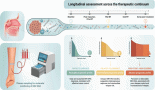
Methodology: Thirty-five patients receiving palliative chemotherapy underwent blood sampling [2 mL in Ethylenediaminetetraacetic acid (EDTA) vial] at baseline and at 3 months intervals. The CTCs were isolated and evaluated using anti-epithelial cell adhesion molecule antibody-based enrichment using the OncoDiscover platform.
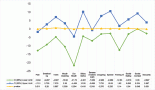
Results: CTCs isolated from 80% of patients (n = 28) showed the sensitivity of cell detection at the baseline and 3 months intervals. The median CTC count was 1/1.5 mL of blood and the concordance with clinic-radiological outcomes was 51.4%. The median CTC count (1 (range:0–4) to 0 (range:0–1)) declined at 3 months in responders, while the non-responders had an increase in levels (0 (range :0–2) to 1 (range :0–3)). Although CTCs positively correlated with progression-free survival (PFS) and overall survival (OS), the association of CTCs did not show a significant difference with these parameters (PFS: 6 months versus 4 months; hazard ratio: 0.68; 95% confidence interval (CI): 0.29–1.58, p = 0.323; OS: 10 months versus 8 months; hazard ratio: 0.54; 95% (CI):0.18–1.57 p = 0.216) between CTC positive and CTC negative patients at 3 months.
Conclusion: This study highlights the utility of CTC as a disease progression-monitoring tool in recurrent HNSCC patients. Our findings suggest the potential clinical utility of CTC and the need for exploration in upfront settings of the disease as well (NCT: CTRL/2020/02/023378).