Treatment and outcomes of people with bladder cancer in Armenia: a retrospective hospital-based study
Samvel Bardakhchyan 1,2, Sona Karamyan3, Hovsep Gharadaghyan1, Davit Zohrabyan1, Liana Safaryan1, Armen Avagyan3,4, Lilit Harutyunyan3,4, Vardan Bardakhchyan5, Amalya Sargsyan1,2, Mariam Mailyan1, Mariam Sargsyan4, Elen Baloyan2,3, Nune Karapetyan1, Marine Rushanyan1, Gohar Mkrtchyan1, Sahak Azizyan1, Martin Harutyunyan1 and Gevorg Tamamyan2,3,6
1Adults Solid Tumors Chemotherapy Department, Yeolyan Hematology and Oncology Center, Yerevan 0014, Armenia
2Immune Oncology Research Institute, Yerevan 0014, Armenia
3Department of Oncology, Yerevan State Medical University, Yerevan 0025, Armenia
4Department of Chemotherapy, Mikaelyan Institute of Surgery, Yerevan 0052, Armenia
5Alikhanyan National Science Laboratory, Yerevan 0036, Armenia
6Pediatric Cancer and Blood Disorders Center of Armenia, Yeolyan Hematology and Oncology Center, Yerevan 0014, Armenia
Abstract
Bladder cancer (BC) is the fifth most common cancer by incidence in Armenia, with 500–550 new cases diagnosed every year. For this retrospective hospital-based study, we collected data during the period 01 January 2010–01 January 2023 from three main oncology centres in Armenia: ‘Yeolyan Hematology and Oncology Center’, ‘Mikaelyan Institute of Surgery’ and “Muratsan” Hospital Complex of Yerevan State Medical University. Statistical analysis was conducted on 01 November 2023. Eighty-seven patients with BC treated during the mentioned period in these three hospitals were included in the final analysis. The male-to-female ratio was 8.6:1. Median age at diagnosis was 65 years. About 5.7% of patients had stage I, 17.2% stage II, 47.1% stage III, 25.3% stage IV BC and for 4.6% of patients, the stage was unknown. Among stage IV patients, the most common metastasis sites were lungs (36.4%), followed by non-regional lymph nodes (31.8%). Median overall survival (mOS) was 31 months for the entire cohort. An mOS was 62 months for stage II, 40 months for stage III and 14 months for stage IV patients. While overall survival for stages II–III, BC was higher than for the metastatic stage; this difference was not statistically significant (40 versus 14 months; p = 0.11). Around 61% of patients received first-line chemotherapy with cisplatin and 33.3% with carboplatin. In people with stage II–III BC, an mOS was significantly better for those treated with cisplatin-containing regimens, compared with those treated with carboplatin-containing regimens (40 versus 16 months; p = 0.021), while in stage IV, this difference was not statistically significant (30 versus 14 months; p = 0.269). In conclusion, this retrospective study with a relatively small number of patients has shown that the survival of patients with metastatic BC in Armenia is poor, with an mOS just surpassing 1 year. We believe that the implementation of newer drugs, like immunotherapy and antibody-drug conjugates, may improve outcomes.
Keywords: bladder cancer, chemotherapy, LMIC, survival rates
Correspondence to: Samvel Bardakhchyan
Email: bardakchyan-5samvel@yandex.ru and samvelbardakhchyan@gmail.com
Published: 04/08/2026
Received: 08/01/2026
Publication costs for this article were supported by ecancer (UK Charity number 1176307).
Copyright: © the authors; licensee ecancermedicalscience. This is an Open Access article distributed under the terms of the Creative Commons Attribution License (http://creativecommons.org/licenses/by/4.0), which permits unrestricted use, distribution, and reproduction in any medium, provided the original work is properly cited.
Introduction
Bladder cancer (BC) is the ninth most common cancer worldwide, with more than 600,000 new cases diagnosed every year [1]. Armenia is a small developing country with a population of about 3 million people. According to epidemiologic and demographic data, BC ranks fifth by incidence in Armenia, with approximately 500–550 new cases diagnosed annually based on the 2025 Health and Health Care Statistical Handbook [2].
The incidence of BC in Armenia is 19.2 per 100K, which is higher compared to Northern European countries (12.7), Western Europe (12.0), North America (11.0), Western Asia (8.5) and Australia and New Zealand (7.1), according to Globocan data [3].
The most common risk factors for BC are smoking and exposure to chemical molecules [4,5]. BC is three times more common in men, but women tend to have worse outcomes [5–7]. Most BC cases are non-muscle-invasive (NMIBC)–about 70%, while 30% are muscle-invasive (MIBC) with high rates of mortality [8]. Histologically, the most common type of BC is urothelial carcinoma (representing about 90% of cases), other types are squamous cell carcinoma, adenocarcinoma and small cell carcinoma [8].
For NMIBC (stage 0–I disease), the main treatment option is transurethral resection (TUR), with further intravesical chemotherapy, intravesical Bacillus Calmette-Guérin therapy, cystectomy or immunotherapy following the American Urological Association (AUA) guidelines [9,10]. When the tumour invades muscularis propria or spreads to regional lymph nodes (stage II–III disease), neoadjuvant cisplatin-based chemotherapy is recommended [10,11]. In the adjuvant setting for patients who have received neoadjuvant treatment and have residual muscle invasive disease or pathologically positive lymph nodes (ypT2-yT4 or yN+) after cystectomy, maintenance immunotherapy with nivolumab or pembrolizumab is recommended. For patients who have not received neoadjuvant cisplatin-based therapy, adjuvant chemotherapy is recommended [10].
Although targeted therapies are widely used for many cancer types, for BC, such options are limited. The Cancer Genome Atlas established a BC project in order to identify potentially targetable genomic alterations [12]. Fibroblast growth factor receptors (FGFR) have been discovered as a potential therapeutic target [13].
FGFR3 alterations are among the most frequent molecular events in BC. FGFR3 mutations and fusions occur in up to 80% of NMIBC cases and in approximately, 10%–20% of MIBC cases, while FGFR3 overexpression is observed in about 40%–50% of MIBC cases, underscoring FGFR3 as a key therapeutic target. In January 2024, the Food and Drug Administration (FDA) approved erdafitinib based on the results of the Phase III BLC3001 trial for patients with locally advanced or metastatic urothelial carcinoma harbouring FGFR3 alterations, whose disease had progressed following at least one prior line of systemic therapy [14]. In parallel, human epidermal growth factor receptor (HER2) expression has been explored as an another actionable biomarker in BC. The FDA granted trastuzumab deruxtecan priority review in January 2024 for the treatment of adults with unresectable or metastatic HER2-positive solid tumours, including BC, who have received prior therapy or have no satisfactory alternatives [15]. Another breakthrough therapy for BC is enfortumab vedotin, an antibody-drug conjugate targeting the nectin-4 protein, which showed high anticancer activity and was approved in combination with pembrolizumab in the perioperative setting based on the results of KEYNOTE-905/EV-303 trial and as frontline therapy for metastatic BC based on the results of EV-302 phase III trial [16,17].
According to data from the Surveillance, Epidemiology and End Results program of the National Cancer Institute, 50% of patients with BC are diagnosed in Tis setting, 34% in the localised setting, 7% in the regional and only 5% of patients are diagnosed in the metastatic setting [18].
According to the Healthcare Statistical Yearbook of Armenia, 75.7% of people with BC are diagnosed with stage I–II disease, 14.2% with stage III and only 10.1% have stage IV disease [2].
Treatment for NMIBC in Armenia is TUR resection with the following intravesical therapy, and for MIBC partial or total cystectomy with or without neoadjuvant or adjuvant chemotherapy is mainly used.
Currently, in Armenia, chemotherapy costs are covered by the government, nevertheless, immunotherapy is still a controversial option for patients. Immunotherapy drugs are expensive for a middle-income country population and the treatment costs are not covered by the Armenian government. Also, there are some obstacles regarding drug registration. The only immunotherapy agent registered in Armenia is atezolizumab. Due to these circumstances, only a few people have the access to immunotherapy. Treatment with newer agents like enfortumab vedotin, trastuzumab deruxtecan or erdafitinib is even more expensive and is not reimbursed.
In this study, we analysed the treatment and outcomes of BC in Armenia during the last 13 years.
Materials and methods
Patient population
In this retrospective, hospital-based study, we collected information from the three main oncology centres of Armenia: ‘Yeolyan Hematology and Oncology Center’, ‘Mikaelyan Institute of Surgery’ and the chemotherapy clinic of ‘Muratsan’ hospital complex of Yerevan State Medical University. Data about the treatment were collected from medical records. Patients receiving treatment for BC from 01 January 2010 to 01 January 2023 were included in this study. Statistical analysis was completed by 01 November 2023.
Statistical analysis
Log-rank tests and Kaplan–Meier curves were used for survival analysis. Univariate and multivariate Cox regression analyses were undertaken, adjusting for baseline demographics and tumour characteristics. A value of p < 0.05 was deemed statistically significant in this study. Statistical analysis was done using SPSS version 20.0.
Results
Initially, 91 patients with BC were included in the study. Excluding 4 patients who were lost from follow-up, 87 patients remained in the final analysis. The male-to-female ratio was 8.6:1. About 70% of the patients were smokers. Median age at diagnosis was 65 years (range 37–82 years). About 5.7% of patients had stage I, 17.2% stage II, 47.1% stage III, 25.3% stage IV BC and for 4.6% of patients’, stage was unknown. About 9.2% had grade 1, 18.4% grade 2 and 60.9% grade 3 tumours. Urothelial carcinoma was the most common histology (96.6% of patients). Among stage IV patients, the most common metastatic sites were lungs (36.4%), followed by non-regional lymph nodes (31.8%).
For stage II–III BC patients, neoadjuvant or adjuvant chemotherapy was used, mainly with cisplatin- or carboplatin-containing regimens. About 61% of these patients have undergone surgery (partial or total cystectomy or TUR). Radiation therapy was not used in our study population. For stage IV BC patients, the main treatment was palliative chemotherapy.
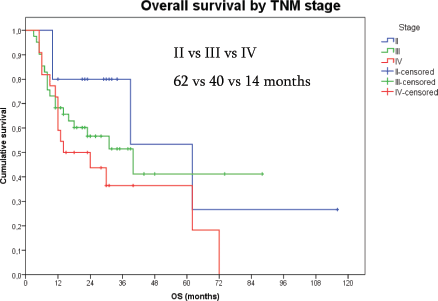
Figure 1. OS by stage.
From the whole study population, 53 patients received first-line chemotherapy with cisplatin (61%), while 29 with carboplatin (33.3%). Only 9% of patients received immunotherapy during their course of treatment.
According to the final analysis, 54% of patients had died. Median overall survival (mOS) was 31 months for the entire cohort: 62 months for stage II, 40 months for stage III and 14 months for patients with stage IV BC (Figure 1).
While an mOS for stage II–III BC was higher than for metastatic stage, this difference was not statistically significant (40 versus 14 months; p = 0.11). As for gender, for male patients, overall survival (OS) was 40 months versus 18 months for female patients (p = 0.096). An mOS for the age group <65 years was 40 and 23 months for the age group >65 years (p = 0.059).
In stages II–III, we found significant differences in mOS among patients who received cisplatin rather than carboplatin as the first-line regimen. An mOS was 40 months with cisplatin and 16 months with carboplatin (p = 0.033) (Figure 2a). Among stage IV BC patients, the difference between cisplatin- or carboplatin-containing regimens was not statistically significant (30 versus 14 months; p = 0.269) (Figure 2b).
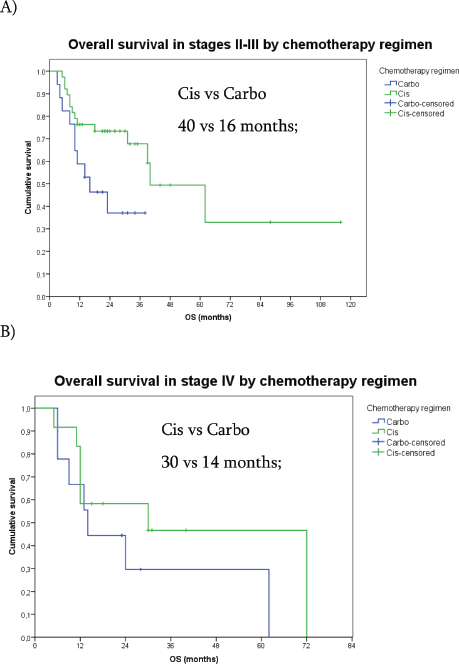
Figure 2. OS based on chemotherapy regimen in (a): stages II–III and (b): stage IV BC.
Discussion
In Armenia, there are no nationally registered treatment guidelines for BC and international guidelines National Comprehensive Cancer Network (NCCN), [European Society for Medical Oncology, American Society of Clinical Oncology (ASCO) guidelines] are followed as much as possible. Treatment for NMIBC in Armenia is TUR resection with the following intravesical therapy and for MIBC partial or total cystectomy with or without neoadjuvant or adjuvant chemotherapy is mainly used. Unfortunately, newer agents, like immunotherapy, targeted therapy and antibody-drug conjugates, are not widely available in Armenia as they are not reimbursed by the government.
The incidence of BC in Armenia is higher compared to majority of developed countries [3], with three-quarters of patients diagnosed with early stage (stage I–II) disease, where there is a high chance of cure [2]. However, 15% of patients with BC in Armenia are diagnosed with stage III disease, which needs multimodal treatment and has a high rate of recurrence and 10% are diagnosed with stage IV disease, where the treatment is often palliative.
In this retrospective study from Armenia, the stage of the disease at diagnosis had the strongest impact on survival. An mOS in our study population was 62 months for stage II, 40 months for stage III and 14 months for stage IV disease. Patients with stage I BC are usually treated by urologists, and in our study, only relapsed stage I patients with muscle invasive or metastatic recurrences were included. Thus, the data for stage I BC did not fully reflect real outcomes.
According to the American Cancer Society, data from 2014 to 2020 indicate that survival in BC strongly depends on stage at diagnosis, with a 5-year relative survival rate of about 98% for in situ disease, 72.6% for localised, 40% for regional spread and 9% for distant metastases [18].
A population-based study from Mallorca, Spain (2006–2011) reported 5-year cancer-specific survival rates of approximately 98% for stage Ta, 90% for carcinoma in situ (Tis), 85% for stage I, 45% for stage II, 35% for stage III and only 7% for stage IV disease [19]. Our study is in line with these data, highlighting that the stage at diagnosis has the most significant influence on survival outcomes.
Recent data published by Movsisyan Vernon et al. [20] have shown better survival of Armenian patients with BC in California compared to non-Armenian, non-Hispanic White patients in California. The situation is, however, not the same in Armenia, where BC survival rates are lower than in many developed countries.
This kind of situation is not only in Armenia, but also in many low-middle income country [21,22].
The clear survival difference between stages II–III and stage IV once again shows how important screening and early detection are in improving patients’ survival [19].
As for gender, male patients seemed to have better survival, but this was not statistically significant (40 versus 18 months, p = 0.096). These data are comparable with the data of USA and Europe. For example, in the USA, the 5-year relative survival rate was calculated to be 79.5% among males and 73.1% among females [23]. Real-world data from France shows that the overall mortality was 79% in women and 63.2% in men (p < 0.001). The median specific survival was 10.8 months in women and 32.7 months in men (p < 0.0001) [24]. Nevertheless, some studies such as real-world data from Germany suggest that there is no difference in survival between genders [25].
In the Armenian population, the median age at diagnosis was 65 years, whereas the global median age at diagnosis is 70–73 [26,27].
In our study population, people aged over 65 years had a worse mOS. This difference may be attributable to the eligibility of patients for treatment. Older patients tend to have more comorbidities and are often ineligible for treatment, especially because many chemotherapy regimens for BC are nephrotoxic. For instance, some studies in the USA show that many patients over 70 years did not receive cisplatin-based chemotherapy, due to comorbidities. They were also less likely to receive subsequent lines of therapy and had lower participation in clinical trials (18% versus 30%, p = 0.05) [28,29].
Among patients with non-metastatic (stage I–III) BC, a notable difference in an mOS was observed in our study depending on the platinum agent used in first-line therapy. Those who received cisplatin-based regimens achieved an mOS of 40 months, compared with 16 months in the carboplatin group (p = 0.033). However, in the metastatic setting, the difference between cisplatin- or carboplatin-containing regimens was not statistically significant (30 versus 14 months; p = 0.269). There are many debates regarding the use of cisplatin or carboplatin for urothelial carcinoma. While some studies suggest that cisplatin is more active than carboplatin and shows better responses and improved survival in non-metastatic MIBC, other studies did not show such differences. However, there is general consensus and NCCN, ASCO and AUA guidelines do not recommend substituting carboplatin for cisplatin in the perioperative setting [10]. The situation is even more debatable in the metastatic setting, where carboplatin is advised in the cisplatin-ineligible population. Several trials and real-world studies have shown that while cisplatin may be more active and has shown better response rates in advanced urothelial carcinoma, the survival differences are generally small and are compensated by less toxicity of carboplatin compared to cisplatin. For example, national Dutch study did not reveal survival differences between carboplatin and cisplatin for metastatic BC, with an mOS in the cisplatin and carboplatin groups being 13.1 and 11.5 months, respectively [30].
Similarly, a Norwegian nationwide population-based study by Omland et al. [31] analysed 575 patients with advanced urothelial carcinoma and reported an mOS of 14.0 months for those treated with cisplatin-based chemotherapy compared with 9.8 months for carboplatin-based regimens.
Our study has shown that the survival of people with BC in Armenia is lower than in many developed countries. This is mostly because there are no national treatment guidelines and modern treatment options like immunotherapy or antibody-drug conjugates are hard to access. Thus, many people can only receive standard chemotherapy and/or surgery. As a result, patients often cannot benefit from newer therapies that have improved survival in other parts of the world. Implementation of national treatment guidelines or adaptation of international ones and better healthcare coverage of newer treatment modalities may help to improve the situation.
Limitations
The main limitations of our study are its retrospective nature and small number of patients, although we included all patients with BC who have received chemotherapy in the medical oncology units of the three major oncology centres’ in Armenia. Also, in our study, stage I BC patients were represented as mainly patients with recurrent disease; thus, survival analysis for them was not conducted.
Conclusion
This study gives an important outlook on how BC is treated and managed in Armenia. We found that the stage at diagnosis had the biggest impact on survival, with patients diagnosed at earlier stages living much longer than those with advanced disease. We believe that improving early detection, expanding access to effective drugs and developing national treatment guidelines may help to improve outcomes for people with BC in Armenia.
List of abbreviations
ASCO, American Society of Clinical Oncology; AUA, American Urological Association; BC, Bladder cancer; FGFR, Fibroblast growth factor receptor; HER2, Human Epidermal Growth Factor Receptor; MIBC, Muscle-invasive bladder cancer; NCCN, National Comprehensive Cancer Network; NMIBC, Non-muscle-invasive bladder cancer; OS, Overall survival; TUR, Transurethral resection.
Conflicts of interest
The authors declare that they have no conflicts of interest.
Funding
The authors received no financial support for the research, authorship, and/or publication of this article.
References
1. Bladder Cancer – IARC [https://www.iarc.who.int/cancer-type/bladder-cancer/] Date accessed: 09/12/25
2. Ministry of Health of Armenia (2025) Statistical Handbook of Malignant Tumors of Armenia (Yerevan: Ministry of Health of Armenia)
3. Bray F, Laversanne M, and Sung H, et al (2024) Global cancer statistics 2022: GLOBOCAN estimates of incidence and mortality worldwide for 36 cancers in 185 countries CA Cancer J Clin 74(3) 229–263 [https://doi.org/10.3322/CAAC.21834]
4. Griffiths TRL (2013) Current perspectives in bladder cancer management Int J Clin Pract 67(5) 435–448 https://doi.org/10.1111/ijcp.12075
5. Ferlay J, Shin HR, and Bray F, et al (2010) Estimates of worldwide burden of cancer in 2008: GLOBOCAN 2008 Int J Cancer 127(12) 2893–2917 https://doi.org/10.1002/ijc.25516
6. Fajkovic H, Halpern JA, and Cha EK, et al (2011) Impact of gender on bladder cancer incidence, staging, and prognosis World J Urol 29(4) 457–463 https://doi.org/10.1007/s00345-011-0709-9 PMID: 21656173
7. Ferlay J, Parkin DM, and Steliarova-Foucher E (2010) Estimates of cancer incidence and mortality in Europe in 2008 Eur J Cancer 46(4) 765–781 https://doi.org/10.1016/j.ejca.2009.12.014 PMID: 20116997
8. Shen PL, Lin ME, and Hong YK, et al (2018) Bladder preservation approach versus radical cystectomy for high-grade non-muscle-invasive bladder cancer: a meta-analysis of cohort studies World J Surg Oncol 16(1) 197 https://doi.org/10.1186/s12957-018-1497-0 PMID: 30285788 PMCID: 6169022
9. Holzbeierlein JM, et al (2024) Diagnosis and treatment of non-muscle invasive bladder cancer: AUA/SUO guideline: 2024 amendment J Urol 211(4) 533–538 https://doi.org/10.1097/JU.0000000000003846 PMID: 38265030
10. Flaig TW, et al (2025) NCCN Guidelines Version 2.2025 Bladder Cancer Continue ф Diagnostic radiology ‡ Hematology/Hematology oncology Þ Internal medicine † Medical oncology ≠ Pathology ¥ Patient advocacy § Radiotherapy/Radiation oncology ¶ Surgery/Surgical oncology ϖ Urology *…, [Online] [https://www.nccn.org/home/member-] Date accessed: 09/12/25
11. Holzbeierlein J, et al (2024) Treatment of non-metastatic muscle-invasive bladder cancer: AUA/ASCO/SUO guideline (2017; Amended 2020, 2024) J Urol 212(1) 3–10 https://doi.org/10.1097/JU.0000000000003981 PMID: 38661067
12. Rodriguez-Vida A, Lerner SP, and Bellmunt J (2018) The cancer genome atlas project in bladder cancer Cancer Treat Res 175 259–271 https://doi.org/10.1007/978-3-319-93339-9_12 PMID: 30168126
13. Ascione CM, Napolitano F, and Esposito D, et al (2023) Role of FGFR3 in bladder cancer: treatment landscape and future challenges Cancer Treat Rev 115 102530 https://doi.org/10.1016/j.ctrv.2023.102530 PMID: 36898352
14. Loriot Y, et al (2023) Erdafitinib or chemotherapy in advanced or metastatic urothelial carcinoma N Engl J Med 389(21) 1961–1971 https://doi.org/10.1056/NEJMoa2308849 PMID: 37870920
15. Meric-Bernstam F, Makker V, and Oaknin A, et al (2024) Efficacy and safety of trastuzumab deruxtecan in patients with HER2-expressing solid tumors: primary results from the DESTINY-PanTumor02 phase II trial J Clin Oncol 42(1) 47–58 https://doi.org/10.1200/JCO.23.02005
16. Vulsteke C, et al (2026) perioperative enfortumab vedotin and pembrolizumab in bladder cancer N Engl J Med https://doi.org/10.1056/NEJMoa2511674
17. Powles T, et al (2024) Enfortumab vedotin and pembrolizumab in untreated advanced urothelial cancer N Engl J Med 390(10) 875–888 https://doi.org/10.1056/NEJMoa2312117 PMID: 38446675
18. Bladder Cancer — Cancer Stat Facts [https://seer.cancer.gov/statfacts/html/urinb.html] Date accessed: 09/12/25
19. Ripoll J, Ramos M, and Montaño J, et al (2021) Cancer-specific survival by stage of bladder cancer and factors collected by Mallorca Cancer Registry associated to survival BMC Cancer 21(1) [https://doi.org/10.1186/S12885-021-08418-Y] PMID: 34445985 PMCID: 8390266
20. Movsisyan Vernon AS, Fejerman L, and Hoch JS, et al (2025) Stage at diagnosis and cancer-specific survival for stomach, lung, colorectal, and bladder cancers among Armenians in California Prev Med (Baltim) 191 https://doi.org/10.1016/j.ypmed.2024.108214
21. Shatkovskaya O, Kaidarova D, and Ongarbayev B, et al (2023) Five-year overall survival of patients with advanced bladder cancer in Kazakhstan: OSURK registry study [Online] Am J Clin Exp Urol 11(6) 542 [https://pmc.ncbi.nlm.nih.gov/articles/PMC10749382/] Date accessed: 31/05/26
22. Farmanfarma KK, Mahdavifar N, and Salehiniya H (2020) Bladder cancer in Iran: an epidemiological review Res Rep Urol 12 91 [https://doi.org/10.2147/RRU.S232417]
23. Mungan NA, Aben KKH, and Schoenberg MP, et al (2000) Gender differences in stage-adjusted bladder cancer survival Urology 55(6) 876–880 https://doi.org/10.1016/S0090-4295(00)00523-9 PMID: 10840099
24. Poli C, et al (2025) Sex differences in muscle-invasive bladder cancers: a study of a French regional population Fr J Urol 35(1) 102723 https://doi.org/10.1016/j.fjurol.2024.102723
25. Niegisch G, et al (2018) A real-world data study to evaluate treatment patterns, clinical characteristics and survival outcomes for first- and second-line treatment in locally advanced and metastatic urothelial cancer patients in Germany J Cancer 9(8) 1337 https://doi.org/10.7150/jca.23162 PMID: 29721042 PMCID: 5929077
26. Saginala K, Barsouk A, and Aluru JS, et al (2020) Epidemiology of bladder cancer Med Sci 8(1) 15 [https://doi.org/10.3390/MEDSCI8010015]
27. Fraslin AM, Benhamou S, and Lebret T, et al (2025) Incidence of bladder cancer, healthcare pathways, and economic burden: a real-world observational study from the French national healthcare system database Clin Genitourin Cancer 23(3) 102344 https://doi.org/10.1016/j.clgc.2025.102344 PMID: 40286514
28. Tempo J, Yiu TW, and Ischia J, et al (2023) Global changes in bladder cancer mortality in the elderly Cancer Epidemiol 82 102294 https://doi.org/10.1016/j.canep.2022.102294
29. Tripathi N, et al (2024) Treatment patterns and outcomes by age in metastatic urinary tract cancer: a retrospective tertiary cancer center analysis Cancers (Basel) 16(11) 2143 https://doi.org/10.3390/cancers16112143 PMID: 38893262 PMCID: 11172373
30. Richters A, Boormans JL, and Van Der Heijden MS, et al (2022) Overall survival of patients receiving cisplatin or carboplatin for primary metastatic urothelial carcinoma of the bladder: a contemporary dutch nationwide cohort study Eur Urol Focus 8(4) 995–1002 https://doi.org/10.1016/j.euf.2021.08.009
31. Omland LH, Lindberg H, and Carus A, et al (2021) Real-world treatment patterns and overall survival in locally advanced and metastatic urothelial tract cancer patients treated with chemotherapy in denmark in the preimmunotherapy era: a nationwide, population-based study Eur Urol Open Sci 24 1–8 https://doi.org/10.1016/j.euros.2020.12.002 PMID: 34337488 PMCID: 8317834