P-32 microparticle brachytherapy plus FOLFIRINOX shows promising local control in unresectable pancreatic cancer

17 Jul 2026

The content on this site is intended for healthcare professionals only
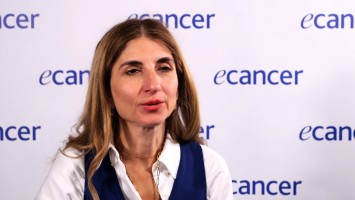
At ASCO 2026, ecancer talks to Dr Jessica Paulus about real-world data evaluating GLP-1 receptor agonist use in patients with cancer treated within a large US oncology network.
The analysis found that patients receiving GLP-1 therapies experienced improved overall survival compared with non-users, with breast and prostate cancers accounting for the largest proportion of GLP-1 use.
Dr Paulus notes that these findings support further research into the potential role of GLP-1 therapies in cancer care and their impact on long-term patient outcomes.
There have been some interesting publications recently that have come about investigating the potential anti-cancer potential of GLP-1 receptor agonists. GLP-1 receptor agonists are one of the fastest growing drug classes in history, so something like 13% of Americans now report using these medicines. There has also been emerging evidence that GLP-1s may have an anti-cancer potential in addition to their well-established effects on diabetes, metabolism and cardiovascular disease control.
There have been a couple of epidemiological studies investigating this link of the anti-cancer potential of GLP-1s in human populations but so far mostly those were in rather single cancer studies or more limited in sample size. So, to date there hadn’t really been a very comprehensive large-scale study asking this question – what is the relationship between GLP-1s and overall survival among patients with cancer across a number of tumours. So that’s the gap that we aimed to fill.
Could you outline the methodology?
This was an observational study that made use of real-world data. This was a study that was based on data emanating from the US oncology network which uses a proprietary electronic health record called iKnowMed. This facilitated us being able to study this relationship at scale. So we used data from almost 500,000 patients across this network. We looked at adult cancer patients with six tumour types and essentially we asked the question was there a documented prescription for GLP-1s documented in that oncology EHR during the study period from 2021 to 2024 and then used typical real-world data methods in terms of Cox proportional hazards models, we used propensity scores to try to deconfound the association. We adjusted for a number of what we thought were priority confounders of this association, so reducing bias in this type of study is one of the most important study design tactics.
What did you find?
One of the most interesting things of our findings was that we found a consistent pro-survival association between the use of GLP-1s and overall survival among patients with these six solid tumour types. We saw this across the crude or unadjusted analysis and, most importantly, in the analyses where we adjusted for potential confounders. We saw about a 34% reduction in the rate of death in the GLP-1 users as compared to non-users. We saw this was consistent, regardless of the deconfounding method that we applied. So this represents a very dramatic, protective signal. We can talk more about the interpretation, understanding the potential residual risk for bias is very important, but the magnitude of the association was very striking.
What impact could these findings have?
These findings are a really important step in continued hypothesis generation around this association. So I have to say there are caveats here that this was a real-world database study, there is the risk of residual and unmeasured confounding as well as misclassification bias around how well we were able to capture GLP-1 use. However, our results were robust to different efforts to deconfound the study.
Many people want to ask the question should cancer patients take GLP-1s to help improve their survival profile or their journey. We’re not there yet, we’re not ready to move to an experimental phase with this, there has not been experimental data to my knowledge on this question, it’s all been observational or real-world databased analyses. That’s where our study really provides an incredible contribution because we did this study efficiently with existing real-world data derived from EHRs. The findings from our study can be used to design prospective studies that are the logical next step. Another next step could be repurposing existing randomised trials, particularly the larger ones, to interrogate this question in a more low-bias environment.
P-32 microparticle brachytherapy plus FOLFIRINOX shows promising local control in unresectable pancreatic cancer
Ultra-sensitive ctDNA detects residual disease and predicts recurrence early in RCC

Durvalumab combined with FLOT improves survival in resectable gastric and GEJ adenocarcinoma
Lurbinectedin plus atezolizumab improves PFS and OS in ES-SCLC first-line maintenance

Encorafenib, cetuximab plus chemotherapy yields good response in BRAF V600E mCRC

Subcutaneous pembrolizumab is a viable treatment option for mNSCLC

Adjuvant docetaxel shows no significant advantage compared to surveillance in high-risk prostate cancer after 10 years

Belzutifan is more efficacious than everolimus in the treatment of metastatic renal cell carcinoma

Perioperative chemotherapy is superior to neoadjuvant chemoradiation in oesophageal adenocarcinoma
