ASCO GU 2026: Latest updates in mRCC
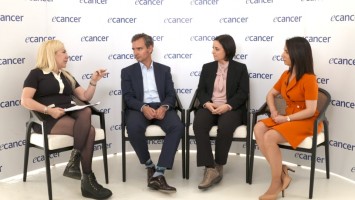
Dr Toni Choueiri – Dana-Farber Cancer Institute, Boston, USA
Dr Guillermo de Velasco – University Hospital 12 ce Octubre, Madrid, Spain
Dr Stephanie Berg – Dana-Farber Cancer Institute, Boston, USA
Prof Viktor Grünwald – University Hospital Essen, Essen, Germany
Dr Cristina Suárez – Vall d’Hebron Institute of Oncology (VHIO), Barcelona, Spain
TC: Hi everyone, thank you for joining us today to this lovely programme from ecancer to discuss the latest, this is a snapshot look at what ASCO GU 2026 came up with. It was a very interesting and very fruitful meeting with a lot of practice-changing, also practice-informing, trials. For that, from Boston, Toni Choueiri here, also joining me my colleague Stephanie Berg from Boston too. And to face Boston we have two colleagues from Spain, Dr Cristina Suárez from Barcelona and her adversary Dr Guillermo de Velasco all the way from Madrid. To break the tie between Boston and Spain there is no-one else than Dr Grünwald, all the way from Germany. I want to start first with Dr de Velasco. LITESPARK-011, the study that Dr Motzer presented, tell us a bit about it and whether your practice will change finally from combination therapy rather than cabozantinib second line post-IO. Guillermo?
GDV: Hello everyone. So this is an open-label, phase III, the LITESPARK study, that basically for patients with advanced metastatic renal cell carcinoma after one PD-1 therapy randomised patients to the standard of care, tyrosine kinase inhibitor, cabozantinib, versus a combination of two different treatments, tyrosine kinase inhibitor lenvatinib plus a HIF2α inhibitor, belzutifan. In this ASCO meeting has been presented the data showing that the combination of lenvatinib plus belzutifan increased progression free survival compared with cabozantinib. There is also an increase in the overall response rate and in this first analysis we’ve seen a trend to see an improvement in the overall survival although to date we haven’t seen a statistically significant result. So basically we are seeing here an improvement in four months PFS from 10 to 14 months. In my opinion this is significant. Seeing a combination of drugs proving that it’s a combination of better PFS, better response rate and a trend in the overall survival, I think that is going to be something clinically meaningful in our clinical practice. It’s the regular way that we saw from the data, from the 005 data, looking at belzutifan monotherapy, when you look at those first data we see an increase in PFS, a hazard ratio of 0.75, from belzutifan compared with everolimus and it seems like a minor increase. However, moving to early lines of therapies it seems that this combination may have a better role. I think this could be something related to the biology of the tumour, there is still a lot of interest into understanding which patients are really getting benefit. But one of the most striking things of this data that has been presented is the duration of response. When you are looking specifically into the duration of response of patients having the combinations, the differences are much higher. So definitely these combinations are proving that some patients are really getting benefit with the combination of the tyrosine kinase inhibitor plus the HIF2α inhibition.
TC: I think that’s fair and the toxicity profile, I would say, it’s hard to compare. It’s three drugs but I was surprised to see a differential toxicity profile and it’s not necessarily that two is way worse than one. So more here to come and overall survival there’s a signal, it’s not significant but certainly that could be a practice-changing trial. Now, talking about combination, in the mini oral Dr McDermott presented data on LITESPARK-024 suggesting that the combination with belzutifan of the CDK4/6 inhibitor palbociclib may be of interest. There was a signal there not in response rate but perhaps in PFS. The preclinical rationale is very strong, data from the Kaelin Lab. Dr Berg, you work with Dr Kaelin, same institution, I know your other colleague, Dr McGregor, showed a response rate of 0% in palbociclib single agent but we have examples from breast cancer where there could be some synthetic lethal here. Do you think that combination is dead or you would like to see it in a future study? Tell us a bit about LITESPARK-024.
SB: Thanks Dr Chouieri. I don’t think the combination is quite dead yet but it is something that we know monotherapy in kidney cancer is likely not going to happen. But the combination was safe outside of the toxicities that we know and it was a very heavily pre-treated population. So, again, this was for clear cell kidney cancer, this was looking at combining belzutifan with palbociclib and it is something where they had to have at least two prior systemic therapies including PD-1 and VEGF. So from what we were just talking about before when they’re in this third-line regimen if they haven’t seen a HIF2 it would be something to bring in. We didn’t really see, as you noted, more responses than we wanted but safety wasn’t as detrimental to anybody and everybody was tolerating it. I think they said they have a median PFS of about 7 months compared to there’s 5-month PFS as well for the monotherapy. So it’s something that we’re going to probably keep exploring and maybe find different doses, maybe certain tumour types are going to be a little bit more responsive. We have our trial here at Dana-Farber with palbociclib, axitinib and sasanlimab so maybe a triplet combination. Specifically in translocation RCC there might be some better… from our preclinical models really, so they show the synergy of that combination, again maybe biology really does have to come into part here for this combination. So we'll see. I'm optimistic.
TC: I actually agree. One of the questions Dr McDermott answered and showed us, despite I’m a big believer in single agent but certainly palbociclib’s story in breast cancer, it works in combination in ER+ tumours. At the end of the day palbociclib single agent in breast cancer, one of the trials showed a response rate of 7% and when you combine it you see synergy. I believe that synthetic lethality, of course, is real and it can translate occasionally, still occasionally, into therapeutic benefit in randomised trials. I agree with you, this is not dead and the story should continue. There are also new drugs that target the CDK pathway that can be used with HIF2 inhibitor. Now back to Dr Grünwald and just to let you know we are at poles opposite, Dr Grünwald and I, from our Bundesliga allegiance but here we’re going to keep the peace. You published a lot, Viktor, you were one of the pioneers in looking at responses and amount of tumour shrinkage in relation to survival and durability of responses. Here, despite you did it in the metastatic setting, one of the abstracts looked at outcome of nephrectomy after immune checkpoint inhibitors, a multicentre study. Response rate low but it’s a big difference, 11%, of CR, but it’s a bit different than PROSPER where the response rate was actually 0%. But that’s a very small dose, a very small duration in neoadjuvant. Where do you think this is going? Do you believe in the neoadjuvant approach? That’s abstract 454, Viktor.
VG: Yes, thank you Toni. Whenever it comes to the primary tumour, there has been a lot of doubts how much medical treatment can really deliver in terms of the primary and whether… It also fostered this whole discussion about when to take out the primary tumour – is it up front, is it after a deferred cytoreductive nephrectomy if patients respond? What we have seen here in 454 is actually a retrospective analysis looking into outcomes of patients that had secondary nephrectomy, so deferred cytoreductive nephrectomy. Basically what I found quite interesting is that those responses, they were looking for pathCR, so complete disappearance of vital tumour in those sections, and it occurred really across all different types of therapies offered. It could occur with single agent checkpoint inhibitor therapy, dual checkpoint inhibitor combination and TKI/IO combinations. So at the end it’s quite important to see that, first of all, pathological CR does occur with medical treatment in primary tumours of the kidney and they had in median 8cm in size. So it’s sufficient to really turn these large tumours into complete responders, at least on pathological reads. Second of all, it also opens up the discussion that multimodality therapy in kidney cancer is also possible. I think it’s also part of our clinical reality but usually we do the resection first, then we do the adjuvant treatment. The question is really can we move it forward to neoadjuvant therapy, that would be also an indicator that it’s possible and it’s feasible. On top of that is pathCR associated with outcome and the answer from that study was yes, it gives you better overall survival expectations in patients. So, overall I think it’s a very nice study, academic study, looking to a biomarker which is pathological complete response in kidney cancer patients.
TC: I think that’s very reasonable and we have to move, I believe, in the neoadjuvant setting and do a phase III study just to ask that question. I do think that people have been looking at pathologic CR, pathological response, as the primary endpoint, as a readout. I think we are too late for that, we have to just do it and look at event free survival in neoadjuvant kidney cancer and bite the bullet and have one randomised phase III that could change how we do kidney cancer, rather than doing a smaller study. Dr Berg and myself and a few others at Alliance are planning such a study by the name of NeoShift. Now neoadjuvant may not happen but then we have to build on adjuvant pembrolizumab, that’s the only drug that extends overall survival in the adjuvant setting in the history of kidney cancer. Therefore I’m going to leave it to Dr Suárez who took the stage many times to discuss big studies like that. Tell us, please, how do you see first the results, the scheme of the study, the result and how do you see your practice might change if this combination gets approved?
CS: So the LITESPARK-022 trial is an adjuvant trial that included patients, the population was very similar to the KEYNOTE-564. I would say the main difference is that you could include patients with resected metastasectomies after two years after the nephrectomy. So the patients were included, it’s a big effort – 1,841 patients were included in this trial, a big effort, and around the world. Patients were randomised to receive pembrolizumab for one year as a standard of care plus placebo versus pembrolizumab plus belzutifan. The primary endpoint was DFS and the trial was positive for DFS. In the presentation median DFS was not still reached in each arm but the estimated 24 DFS rate was 80.7% versus 73.7% in each arm. OS was immature and the hazard ratio for DFS was 0.7. So there were not too many more related adverse events, as expected we had more anaemia, more hypoxia in the belzutifan arms but in general it was very well tolerated. So I think this is a very important trial and the results are clinically meaningful. Obviously I think it will change the scenario in the adjuvant setting. We need to expect for longer follow-up for OS but I think these results in DFS with this well-tolerated drug are very important. So, yes, I would use it in my clinical practice tomorrow if I could.
TC: Hopefully we’re going to have more follow-up for the OS, the 28 months median follow-up is very, very, very short for an adjuvant study to have an OS. 29% only of events. Hopefully some biomarkers such as ctDNA, KIM-1 will be informative. I’m looking honestly at quality of life and patient-reported outcomes during the study to guide us more, knowing, unlike metastatic disease for which we are already on these drugs and you’re going to take them until progression, the one year duration makes probably this more acceptable because one year and you’re done. So more to come, again, as you said. It’s a very, very large study and maybe we should start thinking of building on pembro/bel. I think that’s reasonable. I’m going to pick one of you to give me maybe a ten-second summary and what’s your suggestion about the PELET trial. First I’m going to get Viktor, perhaps, to summarise the PELET trial for everyone, then we’re going to go one by one. I like this study simply because we don’t see a lot of studies focussed on advanced RC with venous thrombus. So it’s a unique study and the authors should be congratulated for doing a study like that. But let’s see if pembro/len is going to be the treatment of choice in patients with venous thrombus or this is just suggesting any VEGF/IO can be. So guide us through the study, Viktor, then we’ll ask you, Viktor, and then everyone to tell us their two cents.
VG: Yes, I think you said it already Toni, I think it’s very tough to do such a study. It’s a very niche indication but a very clinical one, clinically important one. Because we do see those patients that have extended venous tumour thrombus and the question is really how effective are those treatments that we use today. In that study lenvatinib and pembrolizumab has been tested and the impact on the venous thrombus has been measured actually. It’s really brave because we are usually missing this kind of information from the other studies that have been reported so far. I think the conception among many is really that medical treatment does not do much in order to shrink down the tumour or the tumour thrombus. Actually here it’s different, so we have seen that actually when you look into tumour shrinkage of the thrombus and tumour shrinkage more than 30% was achieved by 45% of the participants actually. One-third, roughly, had shrinkage by more than half of the tumour thrombus size and then eventually it really downgraded the level of extent, so the level of the thrombus is being measured below the liver or above the liver. So it really shrunk it down by the level of extent by 45%. So this is really something that makes a difference, if you have a level that is beyond the liver veins, so really above the diaphragm. That’s a large operation that you have here and if you can bring that down to the next lower level, so before the liver veins basically, it will impact our clinical decision-making process. So I was not part of the team so I don’t know exactly how patients looked like but just by looking at the abstract I think it looks very promising and reassuring that medical treatment is quite effective on the primary.
TC: I love that when people really try to do studies that are impossible to do, just take it on them, and each one of us have done that in our career, that’s why maybe we’re on this call. Cristina, is that the same that you think as Viktor about this study?
CS: Yes, absolutely, and I think it’s very important for neoadjuvant treatments as well. In the PELET trial patients were metastatic but it gives you an idea of what could happen with the neoadjuvant treatments and especially with this new combination, or not that new now, with a high overall response rate. So I think it’s especially important for this setting and, as you mentioned Toni, we need to move to the neoadjuvant setting. So this gives a lot of information for these trials.
TC: Guillermo, do you use pembro/len or you’re fine to use pembro/axi or cabo/nivo and this is just an example of what VEGF/IO can do?
GDV: I think it’s one of the examples that IO/tyrosine kinase inhibitor is offering good control of disease in general. Obviously what we see with len/pem in general is really high response rate and I think this data is quite aligned with what we’ve seen previously with the CLEAR data, for example. In these situations with venous tumour thrombus, one of the most complex situations is where you need to go in localised to the surgery up front or you go for systemic therapy. This kind of data is helping us to think, okay, usually it’s easier to start with systemic therapy because we have access to the systemic therapy and it’s much more complicated to find the right surgeon to do this kind of surgery. I think this is good data. In general what I would recommend is in these kinds of situations you could, with this data, safely start with IO/tyrosine kinase inhibitor. Obviously if you have access to len/pem it sounds a pretty good option and obviously you have also time to discuss and to find the best cardiac surgeon to do this kind of surgery.
TC: And I would think, Stephanie, you agree?
SB: Yes, I agree. I think it’s one of those things as clinicians if patients have this untreated congestive heart failure, liver failure, they could run into a lot of problems if we can’t control the thrombus, left untreated. But I love Cristina’s comments too, and Guillermo’s, because if you want to go to surgery you have to have a thrombus that the surgeons can actually remove and take care of because it’s quite complex. If we have a best combination to shrink it by that much, that’s pretty impressive, at least we have some data behind it compared to the other ones, as they’ve looked at in this trial.
TC: So the final abstract, I want to ask you this, but your answer has to be yes, no or it depends, without going further. Axitinib/avelumab, this is a combination dear to my heart simply because I was involved in it and it’s FDA approved in the US but not used because other combinations show simply an overall survival benefit that axi/avelumab did not show, PFS, response rate. But there’s an analysis from German Renal 101, so it’s saying that the group that is favourable risk, those 20% first-line metastatic RC, did have some signal that they benefit really well. So my question for everyone, starting with Cristina because she’s on the left of the screen here, do you think you can bring back axi/avelumab as a potential option or maybe the option in favourable risk, yes, no or it depends?
CS: It depends.
TC: OK, Viktor?
VG: You make it very brief, Toni. Yes, it depends. Yes, so you’re going to have to prove…
TC: It depends. So Viktor, I’m German, so to me just stick short. Guillermo?
GDV: Yes, I think it’s a yes.
TC: And Steph?
SB: No.
TC: And I’m no, maybe this is the Boston despite, simply because I think favourable risk in each VEGF/IO showed the same. But, of course, if I’m in a country or in a situation where I don’t have access to other drugs or if price can be negotiated, certainly this is an active combination that showed a response rate and PFS benefit that were durable. But, no, for many reasons I’m not going to go through. I enjoyed you, I enjoyed this panel. I hope we can do it again. I think ASCO GU was, in a way, transformational. In kidney cancer only there are two very possibly practice-changing studies. Now, you may not change your practice but at least some will, especially if the approval follows. There are a lot of practice-informing studies, we saw with axi/avelumab, a lot of you may have it as an option in favourable risk. We saw that in the neoadjuvant setting, or at least in patients with venous thrombus, pembro/len is extremely reasonable. And we saw a glimpse of hope, bringing back combinations such as CDK4/6 inhibitor with belzutifan. So for that I want to thank you and thank you for adjusting your clinic and your times to fit Boston, Germany and Spain. Thank you ecancer also.